Skip to main content
Intuitive control of muscle-machine interfaces (MMIs)
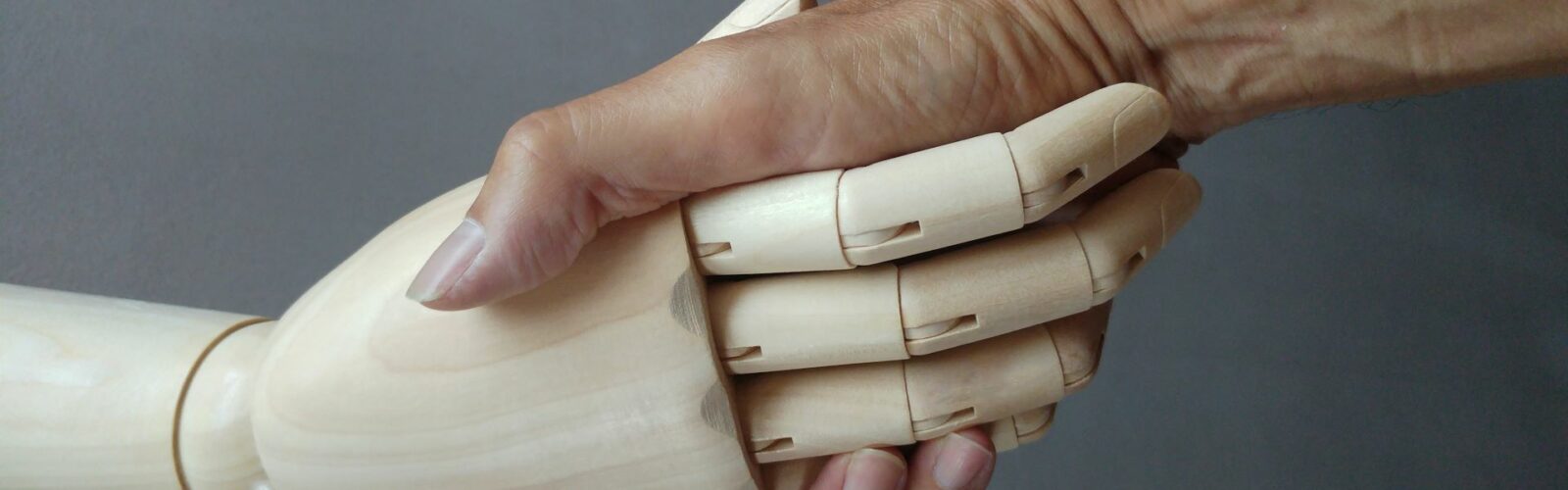
- Intuitive control of MMIs such as prosthetic hands is an essential need for individuals using these interfaces. Meanwhile, current control strategies utilize machine learning algorithms that convert EMG activity into different hand gestures. However, to have intuitive control, such as the one in our biological hands, continuous force and joint angle control are essential. Therefore, we are examining the possibility of extracting more information for more continuous control in the MMIs.
Sensory augmentation/restoration for human-machine interfaces (HMIs)
- Receiving sensory feedback during interaction with the environment is essential for successful motor implementation. However, during interaction with VR/AR or for individuals who are using prosthetic hands, there is no sensory feedback. This can create several issues, such as a lack of sense of embodiment over the device (e.g., prosthesis), a lack of fine-tuned movement, and a high cognitive load. Therefore, we are working on developing different invasive and non-invasive methods of sensory feedback and neuromorphic encoding to restore/augment sensation.