A.Q.U.A.L.U.N.G
Autonomous Quadrotors Utilizing Attack Logic Under Navigational Guidance
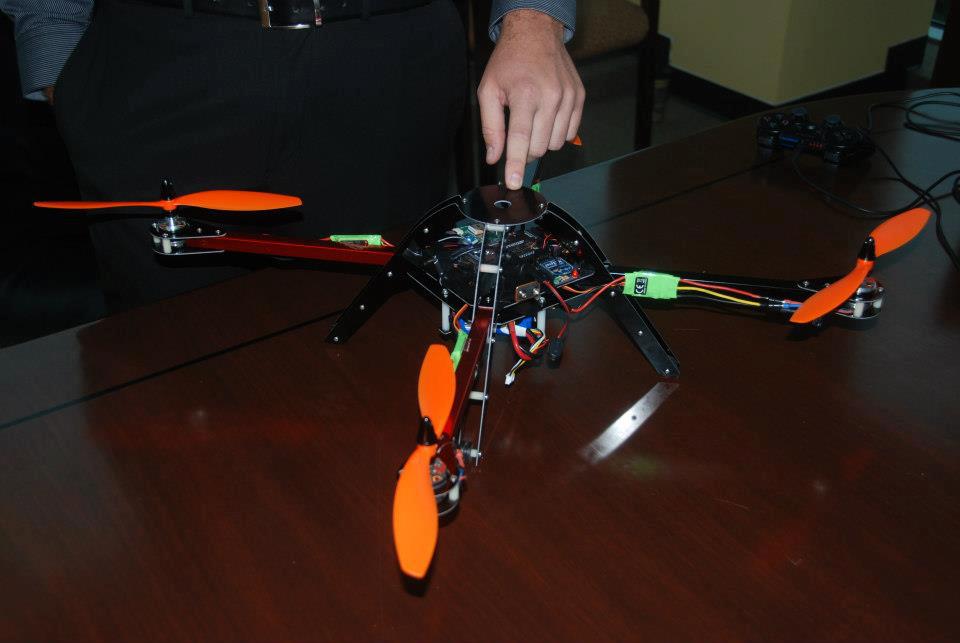
The A.Q.U.A.L.U.N.G. project’s most direct practical application is for entertainment purposes; to be able to play laser tag competitively against human opponents. Not only can this project be applied for entertainment purposes, but it can also be used for training of police or military personnel. The quad rotors could be used to observe and record training simulations currently being conducted by these factions, and allow a more thorough review of these training sessions. Creating an autonomous robotic system, such as the team of quadrotors used in the A.Q.U.A.L.U.N.G. project, requires the implementation of dozens of technologies and the design of a coherent means of combining them. To facilitate an organized approach, every component of the project is matched to one of four subsystems. These subsystems are:
- Artificial Intelligence
- Power Management
- Flight Control
- Computer Vision
Each subsystem is interconnected with the others in a manner that is straightforward, making their integration a more manageable task than trying to connect all of the systems to each other individually. The general organization is that every subsystem feeds information to the AI system, which uses this information to make real-time tactical decisions. Then the AI subsystem sends navigation and fire control commands to the flight control subsystem, or a shutoff command to the power management subsystem when applicable. Additionally the AI subsystem assists the Computer Vision system by providing information about the environment, such as expected edges given an individual quad rotor’s position and orientation.
The designers of A.Q.U.A.L.U.N.G wish to acknowledge the assistance and support of their sponsors; John Enander, Jeff Moler, and Tim Parker.