
TEAM 3
Welcome to Project Mayhem.
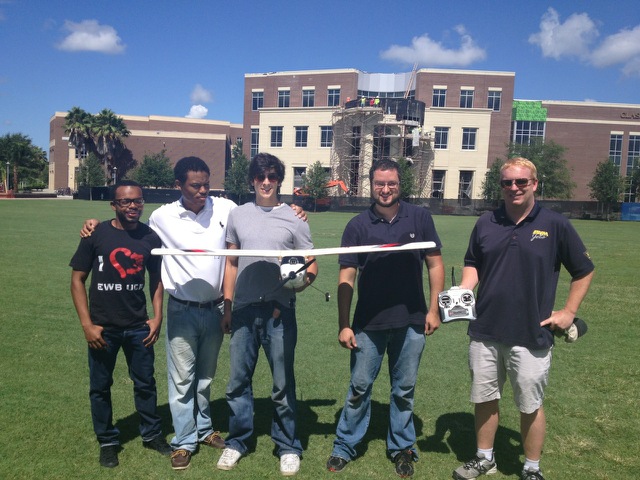
The idea of working on a FPV airplane was introduced by Brian who was interested in aviation systems. The plane incorporated control systems, sensors, data-telemetry, micro processing, and radio frequency transmission, presenting various subjects.
|
The airframe used was a entry-level Styrofoam RC aircraft. In achieving its robustness, incorporated
into the design are a
flight control module, high-definition video system, and a data telemetry
system. The internal
electronics and the flight control module are based around the ARM M4
Cortex DSP microprocessor capable of making fast analog analysis as well
as complex calculations for sensor data and controls.
The M4 line of microprocessors is robust enough to handle all onboard
data collections, computations, as well as the control signals. The FPV aesthetic is achieved through a
5.8GHz FM modulated system with close to the maximum one watt power for
legal transmission, allowing maximized bandwidth and distance reception.
The high-definition video will allow ease of flight and detailed
image processing of the environment. The plane can also be outfitted with
attachable infrared LEDs for flying the camera at night, allowing
night operations and further utility.
|
Sponsor: Dustin Buescher  |
 |
Long range data acquisition is accomplished through the gains of aYagi antenna,
10mW FM transmitter, and matching sensitive receiver. The receiver for the
ground station telemetry is a portable battery powered device that also
has an RSSI gauge to detect the signal strength. The entire system
is made to be competely portable for ease of use and utility. There is also a video monitor
for live video feed of the aerial flight viewpoint using both video
goggles for the pilot and laptop for flight monitoring. The ground
station has a central hub that connects all the analog signals and
converts them to a digital signal that connects to a computer or laptop
and ran on a main program GUI (Graphical User Interface) designed in
java. The GUI uses Java runtime platform so that it can be used on any
system, since it is cross-platform language. The autonomous mode enables
ease of flight while operators can survey the landscape for safe
airplane recovery or emergency landing. The plane will still
maintain manual control at any time when override is deemed necessary.
The system also record location of that aircraft enabling recovery
of the aircraft if downed and also sets waypoints along its flight path
for important locations logged into memory and relayed with the data
systems module.
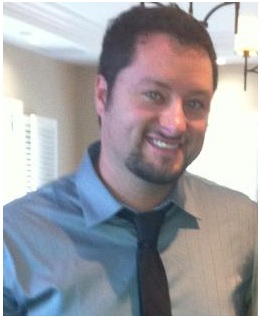
Brian Mahan will be graduating from the University of Central with a BSEE on August 3, 2013. Brian specializes in communications and circuit board design. Brian plans on entering the workforce in the field as a design engineer upon graduation.
Dwayne Wittock will be graduating from the University of Central Florida with a BSCpE on August 3, 2013. Dwayne enjoys programming development boards and graphical user interfaces. Upon graduation he plans on pursuing a career in Software Engineering.
Johnathan Coto is an Electrical Engineer, specializing in control systems. In this project he derived and programmed the control algorithms, developing a stability system for the plane. After graduating UCF Jonathan plans to attend graduate school.
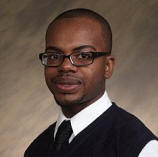
Kent Mertilien is an Electrical Engineer whose passion is power systems and was the lead for the project's power systems. Kent will be graduating from the University of Central Florida with a BSEE on August 3, 2013. He plans on pursuing a career in electrical engineering.