In the wake of the two earthquakes that devastated Venezuela in late June, UCF engineering students are using their skills and expertise to assist those who have been injured.
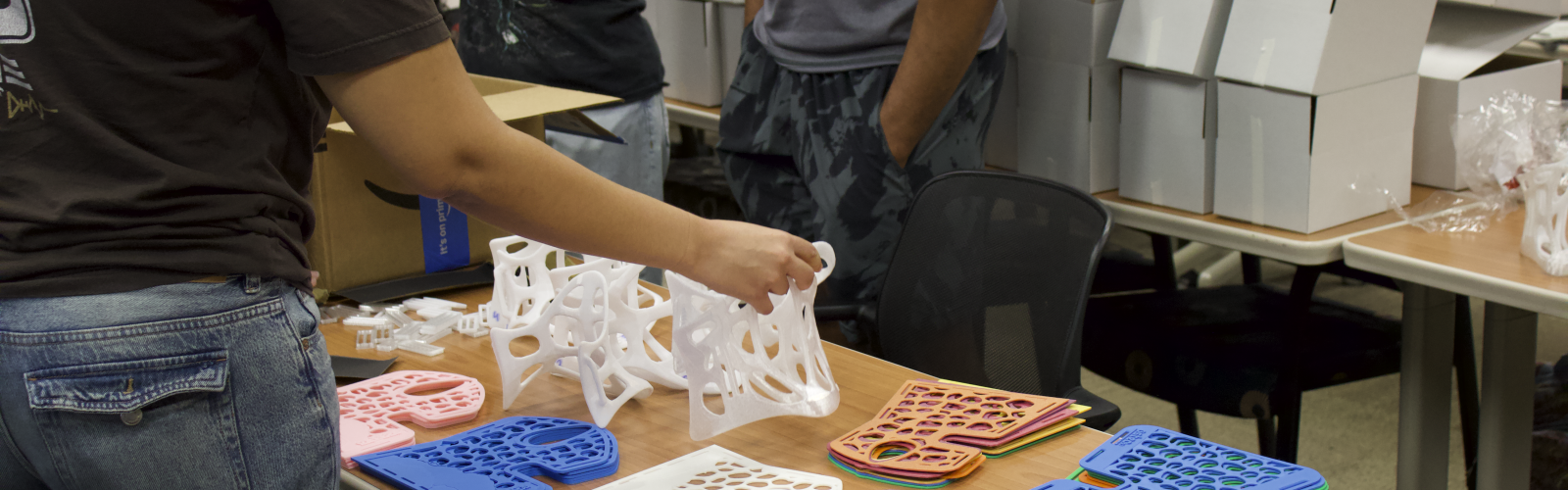
The Biomedical Engineering Society (BMES), with support from the American Association of Venezuelan Engineers (AAVE), is 3D printing orthopedic devices such as splints, neck bracers and pet immobilizers for humans and animals who were hurt in the disaster.
BMES started this initiative, called Bracing Venezuela, after contacting the president of AAVE, Greco Pinzon. Pinzon’s dad, who has been volunteering in Caracas, connected BMES students directly with physicians who identified the types of devices that are needed.
“From there, everything snowballed,” says Jannah Barakat, a mechanical engineering student and the president of BMES. We started test printing, organizing volunteers, building a print tracker, reaching out to other student organizations, and before we knew it, we had a campuswide humanitarian project taking shape.”
So far, BMES has created more than 350 devices that have been shipped to Venezuelan clinicians. Smaller pieces such as finger and wrist splints take a few hours to print and are printed flat. Once in clinician’s hands, they can be softened with hot water and fitted directly to each patient. Larger devices, such as neck braces and animal leg braces, are printed in multiple sizes and can take up to 10 hours to complete. With volunteers from across UCF and beyond, the organization is able to print multiple devices simultaneously.
Barakat says the Bracing Venezuela initiative has been supported by Assistant Professor Mohsen Rakhshan, the BMES faculty advisor and a member of the Department of Electrical and Computer Engineering, who has offered the use of his lab’s 3D printer for the project. Although many of the project volunteers are engineering students, faculty, alumni and 3D printing hobbyists have all expressed interest in helping.
“One of the coolest things about this project has been watching people from so many different backgrounds come together around one goal,” Barakat says. “Whether you’re printing a brace, packing a box, donating supplies or simply helping us spread the word, every contribution helps get these devices into the hands of the people and animals who need them.”
If you have a 3D printer and want to join the BMES volunteers, the organization will supply the filament for you to print the devices. If you don’t have a 3D printer, Barakat says you can still make a huge impact by donating materials, connecting BMES with additional volunteers or just spreading word about the initiative.
As the leader of Bracing Venezuela, Barakat believes the project shows the positive effect that engineering students can have when they come together for a greater good.
“I hope this initiative becomes a model for how engineering students can quickly mobilize to respond to humanitarian needs,” she says. “Whether it’s supporting communities after natural disasters, helping underserved populations locally or partnering with organizations in other countries, I’d love to continue using engineering as a way to make healthcare more accessible wherever it’s needed.”
To join the Bracing Venezuela initiative, reach out to Barakat at Jannah.barakat@ucf.edu.
- Written by Marisa Ramiccio